Things to do
Jerónimos Monastery
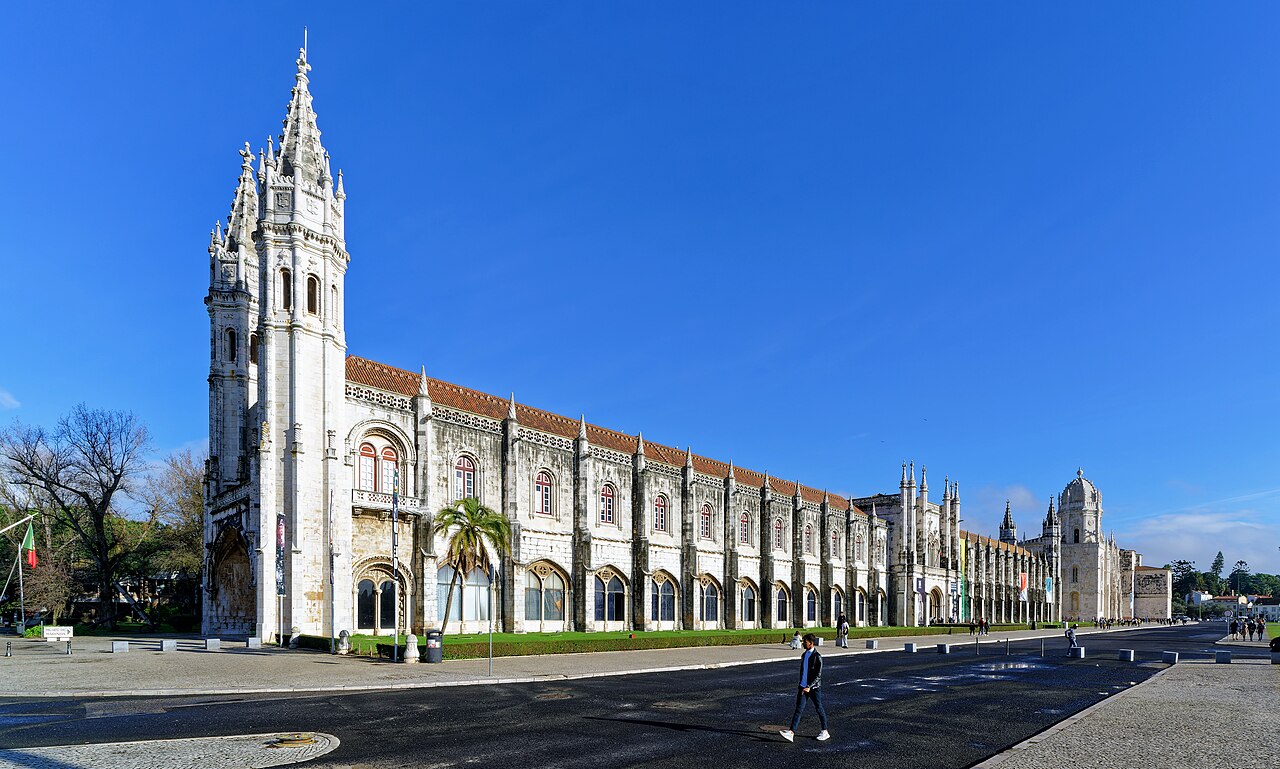
In Belém, a former house of the Order of Saint Jerome stands close to the Tagus, in the Lisbon District of Portugal.
We may earn a commission if you book through our links. It never changes the price you pay.
The short version
Jerónimos Monastery in brief
In Belém, in the Lisbon Municipality of Portugal, you can visit the Jerónimos Monastery, a building in Santa Maria de Belém in the Lisbon District. It sits near the Tagus river and belonged to the Order of Saint Jerome.
What to expect
Architecturally the monastery is held up as a leading case of the Manueline style, the late Portuguese Gothic form found in Lisbon. It took the place of a church on the same site, dedicated to Santa Maria de Belém, whose monks from the military-religious Order of Christ helped seafarers passing through. In the 16th century it became the burial place of the Portuguese royal dynasty of Aviz. A state decree of 28 December 1833 secularised it and gave ownership to the charitable institution Real Casa Pia de Lisboa.
Tips before you go
- Look for the Manueline architecture, the late Portuguese Gothic style the monastery is known for.
- The site was once the church of Santa Maria de Belém, served by the Order of Christ.
Visit
Plan your visit
Find tours
Prices change daily. Check yours for your dates.
Find tours
We may earn a commission if you book through our links. It never changes the price you pay.
Related
More days out
Questions
Jerónimos Monastery: quick answers
Checked 25 November 2026.
What is the Jerónimos Monastery?
It is a building in Santa Maria de Belém, in the Lisbon District of Portugal, near the Tagus river. It once housed monks of the Order of Saint Jerome, and it is held up as a leading case of the Manueline style.
Which Lisbon airport would I fly into for Belém?
Airport and flight details are not covered for this attraction. Check live flight options for Lisbon before you plan the visit, then travel to Belém in the Lisbon District.
What happened to the monastery after the monks left?
A state decree of 28 December 1833 secularised it and gave ownership to the charitable institution Real Casa Pia de Lisboa. In the 16th century it had become the burial place of the Portuguese royal dynasty of Aviz.